README from GitHub, GPL-3.0
Tape Echo 2 — Tape Echo and Spring Reverb for Ableton Move
A component-modelled vintage three-head tape echo with spring reverb for Schwung on Ableton Move. Twelve head and reverb combinations, record EQ and tape saturation inside the feedback loop so every repeat darkens and compresses, wow and flutter, tape age, and tempo sync with the reference machine's leading-head note tables.
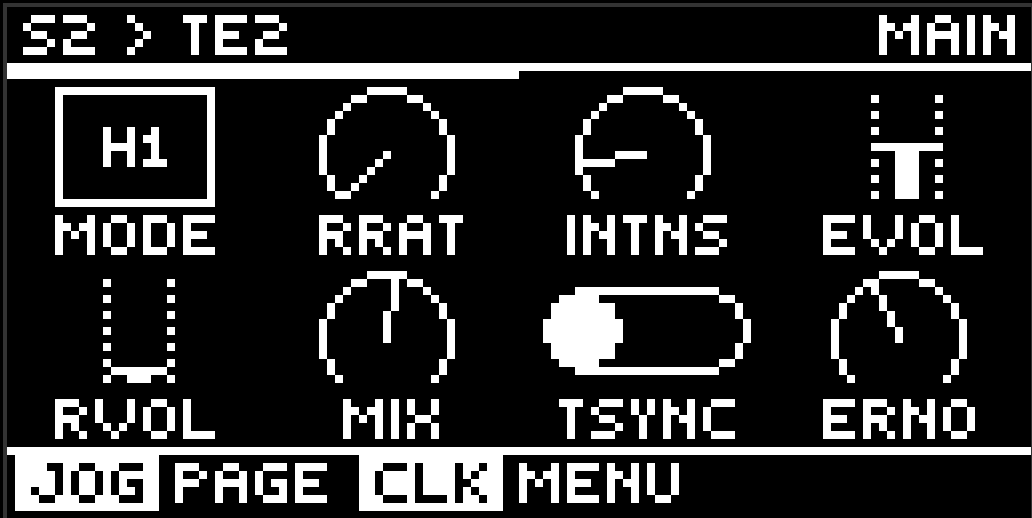
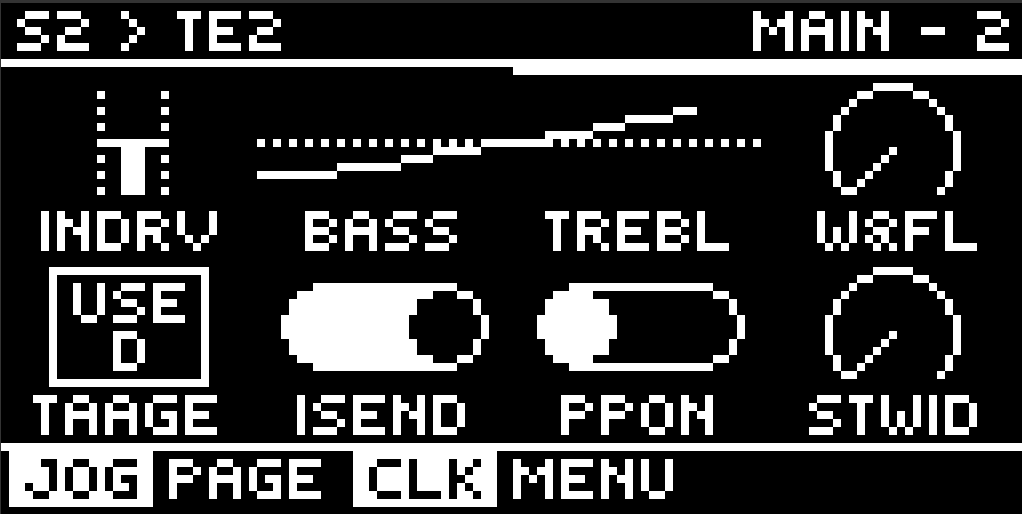
Controls
| Page | 1 | 2 | 3 | 4 | 5 | 6 | 7 | 8 |
|---|---|---|---|---|---|---|---|---|
| Echo | Mode | Rate | Intensity | Echo Vol | Reverb Vol | Mix | Tempo Sync | Rate Note |
| Tape | Drive | Bass | Treble | Wow/Flutter | Tape Age | Input Send | Ping Pong | Width |
Modes are H1 H2 H3 H2+3 H1+R H2+R H3+R H12+R H23+R H13+R H123R Rev — digits
are the live playback heads, R is the spring tank.
Intensity above ~75% self-oscillates. Input Send is the dub switch: off stops feeding the tape while existing repeats wash out. Bass and Treble are on the echo path only.
Ping Pong alternates successive repeats left and right, Width sets how far it swings. Each head alternates on its own delay, so the multi-head modes separate too. With it off the echo bus is mono and the output is bit-identical to Dusk Audio's original — the build checks that against upstream on every run.
Tape Echo 2 reads the older TapeDelay module's settings: the stored delay time picks the playback head that can reach it, and feedback, mix, tone, note division and stereo width carry across. A patch names the module it wants, though, so point it at this one first:
python3 tools/convert_tapedelay_patch.py MyPatch.json
Works with Movy — a
movy_config.json ships with the module.
Remote panel
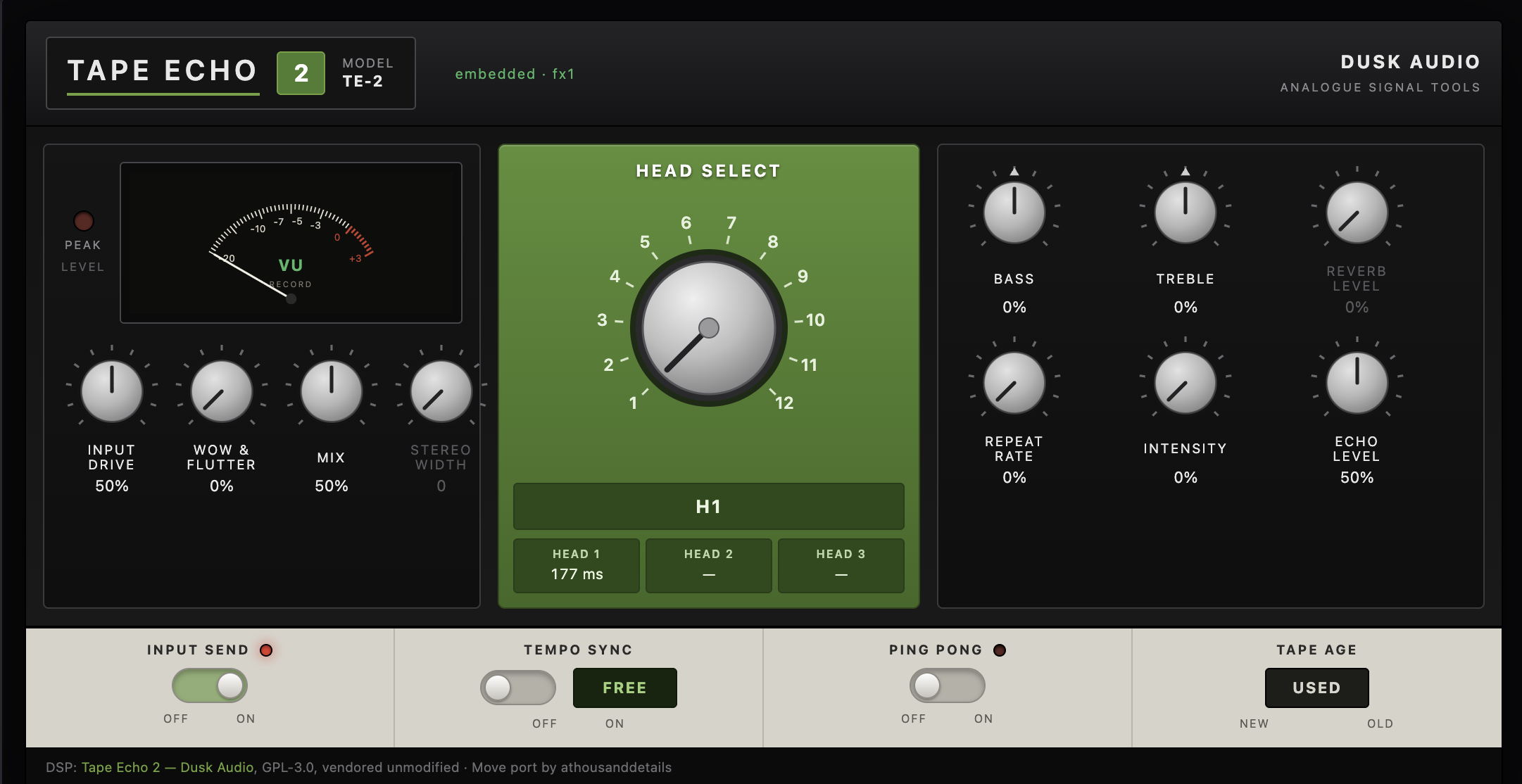
A tape-deck style editor in the browser: draggable knobs, mode and rate-note selectors, tempo sync and input send switches, and a record meter. Open it while the module is loaded in an FX slot:
move.local:7700/api/remote-ui/module-assets/tape-echo2/web_ui.html
On a Schwung that offers custom UIs to FX slots
(#253) the same panel
appears inside the module's section on move.local:7700/remote-ui. It reads
the component it is driving from the host, so it addresses the right FX slot
either way.
Install
Via the Schwung Module Store, or manually: copy dist/tape-echo2/ to
/data/UserData/schwung/modules/audio_fx/tape-echo2/ on the device.
Building
Requires Docker (cross-compiles for the Move's ARM64, pinned to glibc 2.35):
./scripts/build.sh               # builds build/tape-echo2.so + dist/tape-echo2-module.tar.gz
./scripts/deploy.sh <host>       # safe deploy (atomic rename, never over a live .so)
Credits
- Tape Echo 2
by Dusk Audio (GPL-3.0) — the DSP, and all of the modelling credit.
The core in
src/ported/carries one Schwung-specific change, marked in the files: a per-head ping-pong stage on the echo output tap. Switch Ping Pong off and it is upstream sample for sample, which the build verifies against a fresh checkout of the original. - Move port by athousanddetails.
GPL-3.0, inherited from upstream.